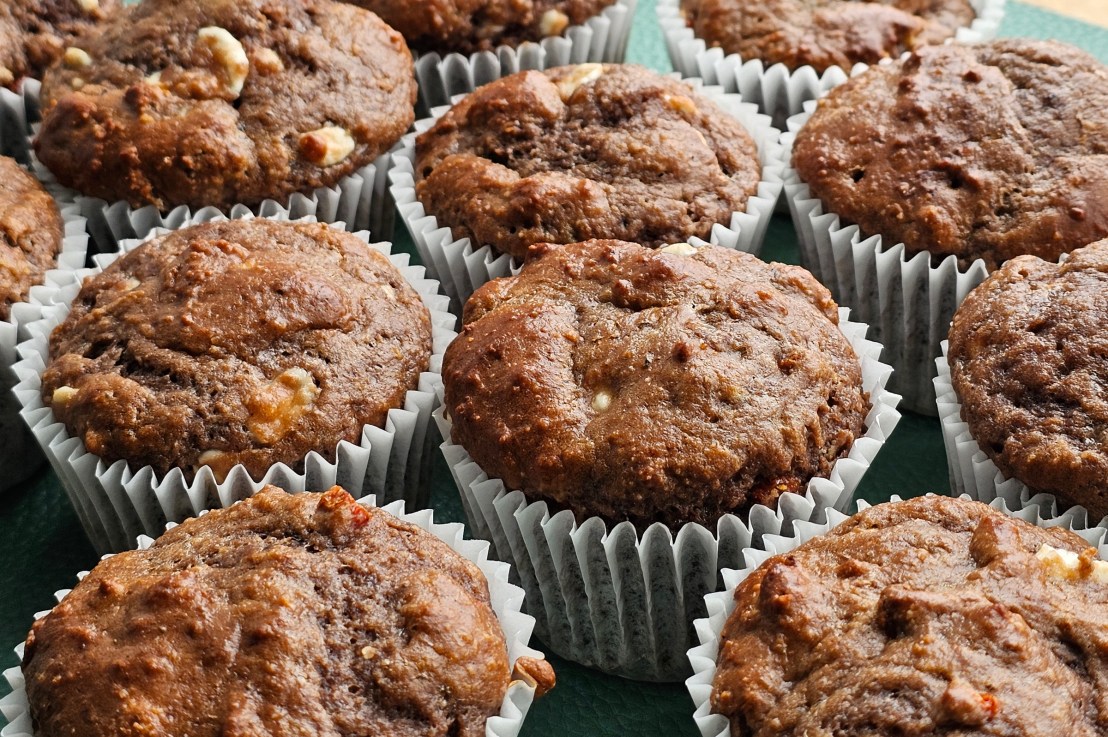
Recently, whilst organising my kitchen, I found a muffin tray that I hadn’t used for absolute ages. My old recipe for white chocolate and raspberry muffins is still one of my favourite muffin recipes I’ve tried, but living on my own, I rarely bake indulgent treats. Well, I decided to make use of the forgotten muffin tray and bake muffins in a healthier, more nutritious, higher in protein version that’s freezable too. It was an experimental recipe, but I’m really pleased with how these muffins turned out! I made them with cottage cheese to bump up the protein, and added dried goji berries for extra nutrients. Yum!
Ingredients for protein muffins with goji berries
For 12 muffins, you will need:
- 150g plain flour
- 1.5 teaspoon baking powder
- 0.5 teaspoon baking soda
- 100g ground almonds
- 1 heaping tablespoon (12g) of baker’s cocoa powder, unsweetened
- 3 eggs
- 250g fat-free cottage cheese
- 1 ripe banana (mine was frozen-defrosted)
- 50g honey
- 1 teaspoon vanilla extract
- 25g dried goji berries
Wondering why the ingredients are listed in grams? Read this post.
How to make protein muffins with cottage cheese
Let me start with a quick disclaimer. I highly recommend using reusable, silicone cases for these muffins. The recipe doesn’t include oil or butter, so they tend to stick to paper cases. It’s not the end of the world, and it certainly doesn’t take away from the taste, but I know that it might be a big issue for some, so wanted to make it clear. If you care about the aesthetics, I recommend using silicone cases. I made these muffins for myself only, and didn’t mind that some of the muffin was stuck to the paper. I scraped the crumbs off the paper cases and ate them, they were still delicious!
To make these muffins, start by pre-heating the oven to 180°C (355°F).
In a large bowl, mix the eggs, cottage cheese, honey, and vanilla extract. Add a mashed banana – it should be very ripe, the more, the better. You can also use frozen banana, which is what I did this time – just make sure to defrost it beforehand. Mix everything together well.
In a separate bowl, mix flour, baking powder, baking soda, ground almonds, and baker’s cocoa powder (the unsweetened type). Mix everything together.
Add the mixed dry ingredients to the bowl with the wet ingredients, and briefly mix everything with a spatula. Don’t worry if there are lumps left in the batter, it’s fine. Add the dried goji berries and briefly stir again. I chopped my goji berries into smaller pieces, but that’s optional.
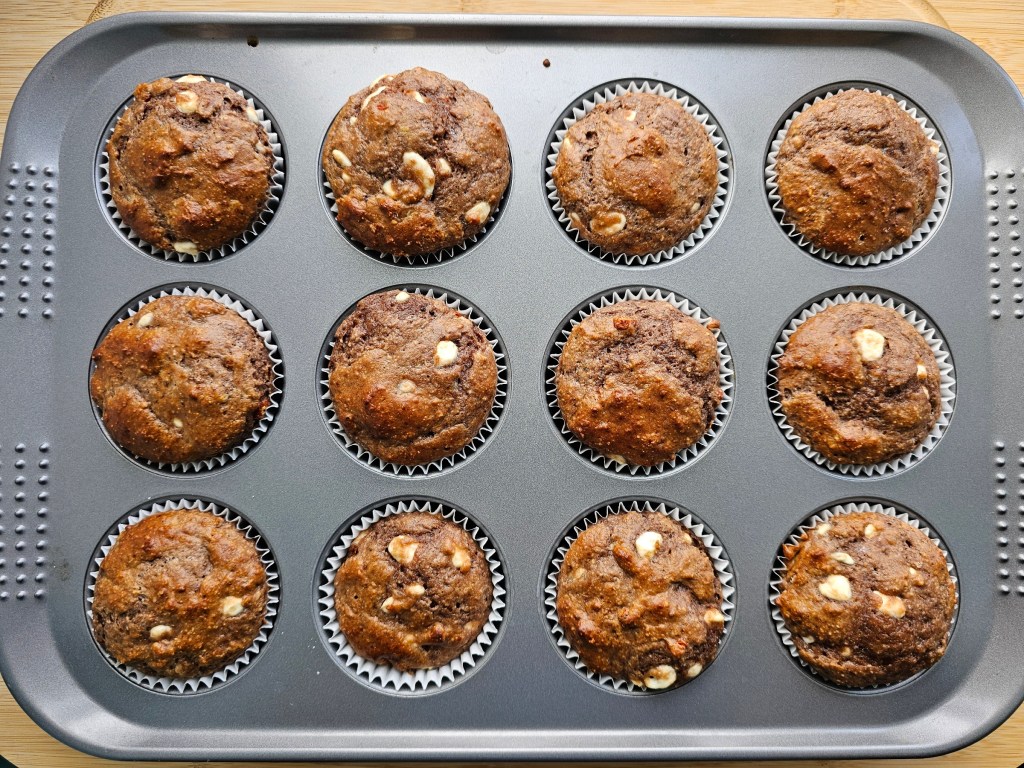
Line a 12-hole muffin tray with paper cases, or – better – use silicone muffin cases. Distribute the batter evenly between the 12 muffins.
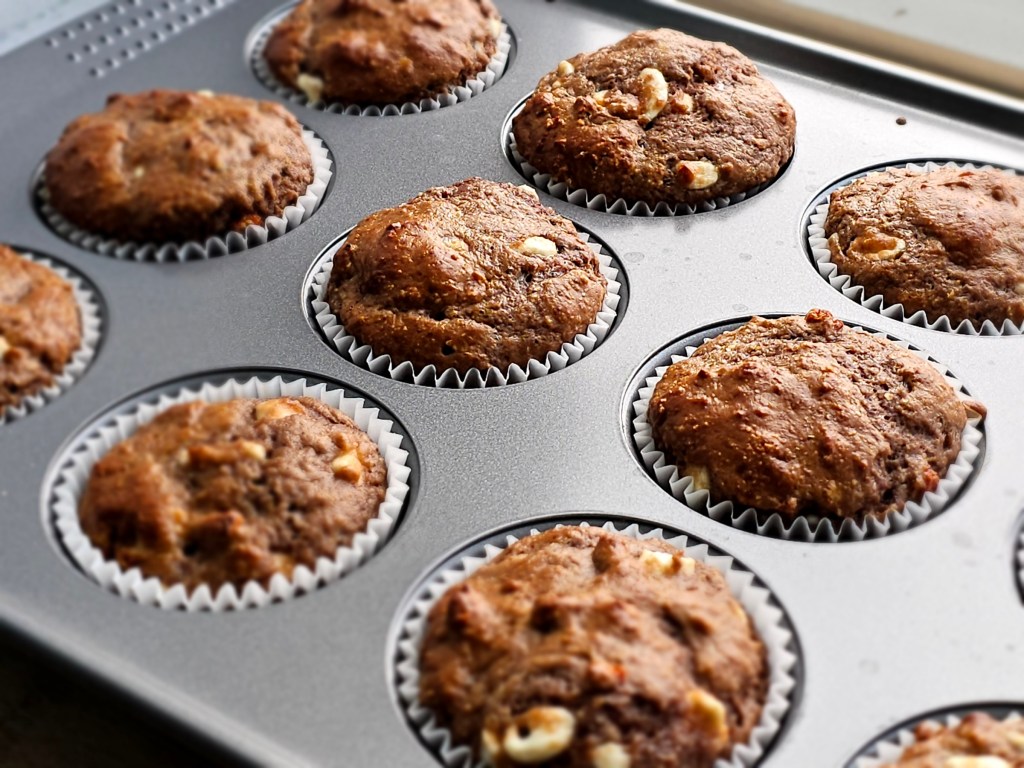
Bake for around 20 minutes. You can test the muffins by poking them with a long wooden skewer after the 20-minute mark. The stick should come out dry – perhaps with some crumbs on it, but no raw batter.
Once the muffins are baked, take them out of the oven, and out of the metal muffin tray. Let your muffins cool on a rack before you dig in.
Ingredient swaps for these protein muffins
If you only have self-raising flour, not plain, that’s even easier. Use 150g of your self-raising flour, and skip the baking powder and baking soda.
If you don’t have goji berries, feel free to replace them with an equivalent amount of raisins or other dried fruit chopped into small pieces. You can also use nuts of your choice or chocolate chips.
I don’t recommend using fresh fruit in these muffins. Fresh fruit contain a lot of water and might cause the batter to get soggy. I briefly considered using fresh raspberries but decided to check my food cupboards for dried fruit instead.
If you prefer richer chocolate taste, you can slightly reduce the amount of flour and add the same amount of cocoa powder. Don’t go too crazy, though.
If you’re not a fan of the lumps of cottage cheese, you can blend your cottage cheese beforehand. Personally, I don’t mind.
Nutritional value of healthier protein muffins
The whole recipe has approximately 1963 kcal, 68 grams of fat, 255 grams of carbs, 87 grams of protein and 25 grams of fibre. The recipe makes 12 muffins. Each muffin has approximately 164 kcal, 5.7 grams of fat, 21 grams of carbs, 7.3 grams of protein, and 2 grams of fibre.
These muffins are a more nutritious alternative to traditional muffins, higher in protein and fibre.
How to store cottage cheese muffins
You can store these muffins in room temperature for a couple of days, in a sealed container. If you know that not all muffins will be eaten within that time, I recommend freezing them right after baking, once they’ve cooled down. You can freeze them for a few months in a sealed bag. To defrost these muffins, simply take them out of the freezer the night before.
Why is cottage cheese used in recipes
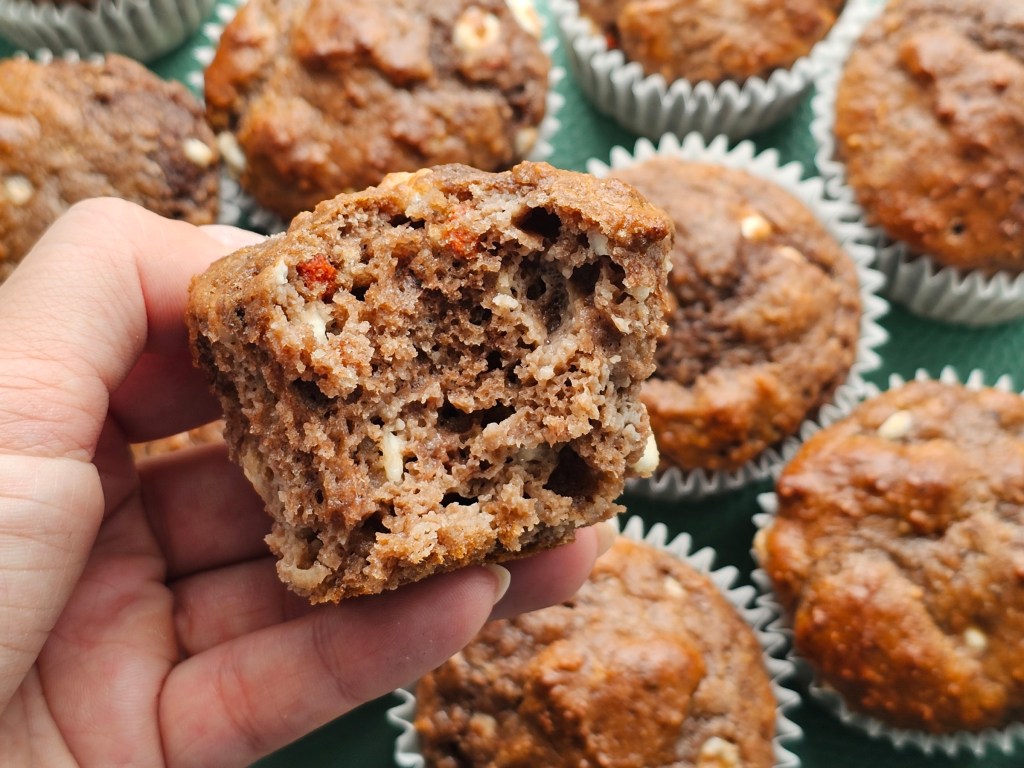
Cottage cheese has become a popular ingredient in online recipes in recent years thanks to its high protein content and neutral taste. Unlike plain protein powder, it doesn’t cause baked foods to get super dry and cardboard-like.
Cottage cheese tends to be quite polarising. Some people love it, others hate it. I do understand the frustration, it seems like every recipe you see online these days calls for cottage cheese! Personally, being from Poland, I’ve eaten cottage cheese by the spoon my whole life. It’s not a novelty to me! But if you want to try plain cottage cheese, be warned. Western cottage cheese tends to be sour, and not palatable at all. Try to get some Polish cottage cheese, it tastes completely different! For baking, though, it doesn’t matter what type of cottage cheese you buy.
I have previously posted other recipes with cottage cheese on this blog, if you want to check them out.
- This gluten-free cottage cheese protein bread recipe is the most viral post on my blog, with thousands of views. You’ll love it even if you’re not celiac.
- These cottage cheese bread rolls are a great protein alternative to traditional bread too – and ready in 30 minutes.
- These moist and fluffy cottage cheese pancakes are my personal favourite recipe from this blog. They’re a staple of my breakfast recipes, I’ve been making them repeatedly for a very long time.
Bon Appetit!
I hope you like these protein muffins as much as I do when you give them a try! They don’t take long to make, and you can easily customise them with simple swaps. Let me know your thoughts if you do make them!
Healthy Protein Muffins - Banana, Cocoa, Goji Berries
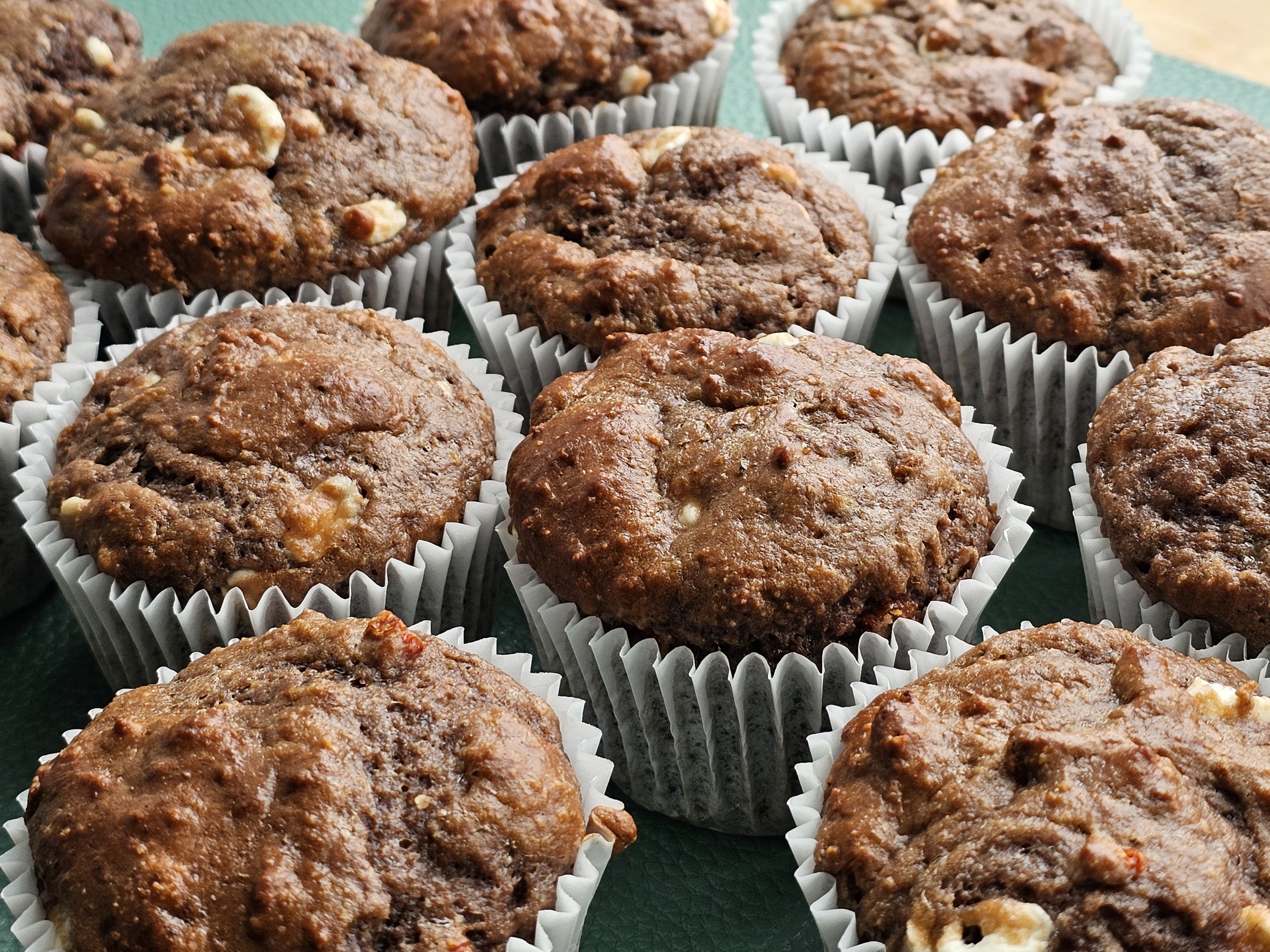
Delicious alternative to bakery muffins, higher in protein
Ingredients
- 150g plain flour
- 1.5 teaspoon baking powder
- 0.5 teaspoon baking soda
- 100g ground almonds
- 12g (heaping tablespoon) unsweetened cocoa powder
- 1 ripe banana (mine was frozen-defrosted)
- 250g fat-free cottage cheese
- 50g honey
- 3 eggs
- dash of vanilla extract
- 25g dried goji berries
Directions
- Pre-heat the oven to 180°C (355°F).
- In a large bowl, mash the banana.
- Add the eggs, cottage cheese, honey, and vanilla extract.
- Mix the contents of the bowl until evenly combined.
- In a separate bowl, mix the plain flour with baking powder, baking soda, cocoa powder, and ground almonds.
- Add the mixture of dry ingredients into the bowl with wet ingredients.
- Using a spatula, briefly mix everything together, but don’t overdo it.
- Add the goji berries and briefly mix again.
- Fill a 12-piece muffin tray with muffin cases.
- Evenly distribute the batter between 12 muffin cases.
- Bake for around 20 minutes – check your muffins by poking them with a long skewer – it should come out dry, with no visible wet batter.
- Once baked, take the muffins out of the muffin tray and let them cool down on a rack.
Also see: