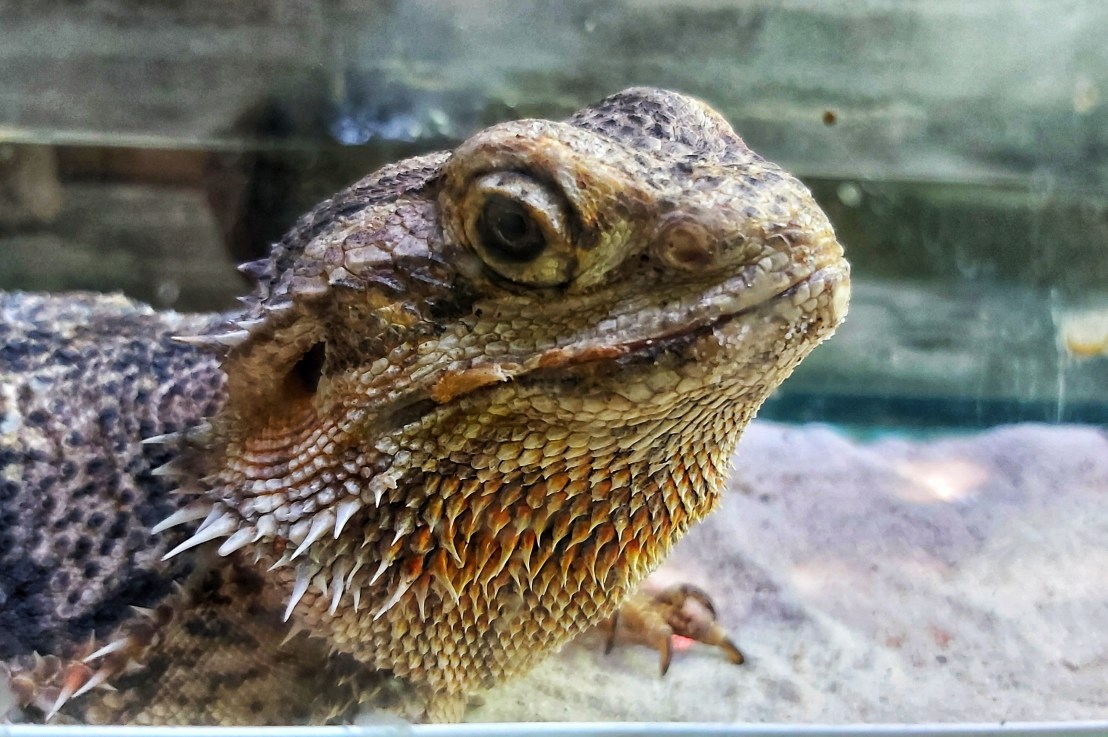
Animals are incredible creatures that inhabit our planet, and the more we learn about them, the more amazed we become. From the tiniest insects to the largest mammals, the animal kingdom is filled with fascinating stories and quirky details that often go unnoticed. In this post, we’re diving deep into the world of animals to uncover some of the most fun and astonishing facts about our furry, feathered, and finned friends. Get ready to be entertained and inspired by the astonishing diversity of life on Earth!
1 Tigers, those majestic big cats known for their striking stripes, possess a fascinating secret beneath their fur. Their skin is adorned with the same captivating pattern, making them truly the kings and queens of camouflage in the dense jungles where they roam.
2 When it comes to owls, their social gatherings are rather dignified affairs. A group of these wise birds is aptly referred to as a “parliament.” Picture a parliament of owls perched in the moonlight, discussing the night’s important matters in hushed hoots.
3 The term “peacock” is often used casually to describe these resplendent birds, but it’s important to note that it applies exclusively to the males of the species. The females, with their more understated beauty, are called “peahens.” So, when you admire the grandeur of a peacock’s tail, you’re admiring the vibrant plumage of a male peafowl.
4 Chickens may seem like ordinary barnyard residents, but they have a remarkable feat to their name. On average, a single chicken lays approximately 260 eggs in a year. That’s a lot of omelets!
5 Your furry canine companion is more unique than you might think. Just like humans have distinct fingerprints, dogs have individual nose prints. These nose prints can actually be used to identify them, adding a touch of canine individuality to the world of pet identification.
6 Koalas, those adorable marsupials from Down Under, share a remarkable similarity with humans. Their fingerprints are so astonishingly similar to ours that they could be easily confused in forensic investigations. Who would have thought that these tree-dwelling creatures held such a secret?
7 The terms “poisonous” and “venomous” often get mixed up, but there’s a clear distinction. Poisonous animals can harm you if you eat them; consuming their flesh or parts can be toxic. On the other hand, venomous animals can harm you if they bite or sting you. So, remember, it’s about ingestion versus injection when it comes to these potentially dangerous creatures.
8 The box jellyfish holds the title of being the world’s most venomous marine creature. These jellyfish, with their distinctive cube-shaped bodies and tentacles stretching over 3 meters in length, wield a toxin so potent that it often proves fatal to victims even before they can reach the safety of the shore, delivered through their stinging cells within the tentacles.
9 In the world of African savannas, teamwork reigns supreme, and among the mighty lions, it’s the lionesses that lead the hunt, responsible for an impressive 90 percent of all hunting endeavors. These fierce females exhibit remarkable prowess in stalking, ambushing, and securing sustenance for their prides.
10 According to this research, pigeons, those often-underestimated city dwellers, demonstrate a surprising intellect. Their numerical competence rivals that of primates, showcasing their cognitive abilities in tasks that involve recognizing and comprehending numbers, challenging the conventional wisdom about avian intelligence.
11 Moving on to dental distinctions in the equine world, where male and female horses exhibit unique dental structures. Male horses possess a set of 40 to 42 permanent teeth, while their female counterparts make do with a slightly smaller count, ranging from 36 to 40 permanent teeth. This divergence in dental makeup highlights intriguing anatomical variations within the species.
12 The koala, renowned for its leisurely lifestyle, takes the crown for sleepiness, spending up to a staggering 22 hours a day in slumber. In comparison, ferrets, while not quite as somnolent, are still champions of rest, dozing away approximately 20 hours daily. These animals certainly know how to appreciate the value of a good nap.
13 Sloths, the epitome of a slow-paced existence, astound us with their digestive fortitude. It can take them a remarkable 30 days to fully break down and extract nutrients from a single leaf. In stark contrast, the human digestive system accomplishes the same feat in a mere 12 to 48 hours, highlighting the striking contrast in digestive efficiency.
14 Hummingbirds, those tiny avian wonders, possess a unique talent that sets them apart from their feathered peers. They are the sole members of the avian world capable of flying in reverse, showcasing their exceptional aerial agility and versatility.
15 In the realm of deadly creatures, it’s the mosquito, often overlooked due to its diminutive size, that ranks as the world’s deadliest animal. Startlingly, the World Health Organization reports that mosquito-borne diseases, such as Malaria, dengue fever, and yellow fever, claim the lives of a staggering 725,000 people each year. These tiny insects wield a disproportionately deadly impact on our world.
16 Roosters, known for their early morning crowing, have a clever built-in mechanism to prevent themselves from going deaf. When they announce the dawn with their loud crow, they tilt their heads backward, effectively covering their ear canals. This ingenious ear-plug-like maneuver safeguards their hearing, allowing them to greet the day without any auditory consequences.
17 While sharks and polar bears often come to mind when we think of menacing teeth, there’s a surprising contender for the toothiest creature. The common garden snail is armed with a remarkable 14,000 teeth, and in certain species, this count can soar to over 20,000, all thanks to their microscopic radula.
18 Speed records in the animal kingdom are nothing short of astounding. The cheetah, holding the title of the fastest land animal, can achieve incredible speeds of up to 75 mph (120 kph). Soaring through the skies, the Peregrine Falcon claims the title of the fastest bird, reaching an astonishing diving speed of 242 mph (389 kph). When it comes to horizontal flight, the Brazilian free-tailed bat outpaces its peers, clocking in at an impressive 100 mph. Even in the depths of the ocean, the Black Marlin reigns as the swiftest aquatic creature, propelling itself at speeds of up to 80 mph (130 kph). These remarkable speeds showcase the diversity of velocity across different species.
19 The Giant Pacific Octopus, a marvel of marine life, boasts a biological portfolio that sets it apart. With not one, not two, but three hearts, this cephalopod ensures efficient circulation and oxygen delivery throughout its complex body. Its nine brains, strategically distributed throughout its tentacles, contribute to its remarkable problem-solving abilities. Moreover, the octopus possesses blue blood, a testament to its unique copper-based circulatory system, which aids in oxygen transport and underlines its distinctiveness in the underwater world.
20 Lungfish, intriguing inhabitants of aquatic ecosystems, have perfected a remarkable survival strategy. These exceptional fish possess both lungs and gills, a biological feat unmatched in the aquatic realm. This dual respiratory system allows lungfish to thrive even in environments where the water levels in their ponds or lakes dwindle, providing them with the means to extract oxygen from the air when aquatic oxygen levels diminish.
21 In a heartwarming and unconventional twist, Wojtek the bear became an honorary corporal in the Polish military during World War II. His journey began when he was adopted by Polish soldiers in Iran. To ensure he received rations and accommodation, Wojtek was granted an official rank in the army. Starting as a private, he gradually climbed the military ladder, eventually achieving the rank of corporal. His duties included assisting with the transportation of heavy ammunition by carrying boxes, symbolizing the unbreakable bond between humans and animals during times of conflict.
22 The world of Mourning geckos defies traditional gender roles. In this unique species, there are no “male” individuals. Mourning geckos are parthenogenetic, meaning they can reproduce without the need for males. This reproductive strategy allows them to perpetuate their species independently. Interestingly, this phenomenon isn’t exclusive to geckos; approximately 70 species worldwide, including certain crabs, snails, and even the Komodo dragon, exhibit this remarkable capability, highlighting the incredible diversity of reproduction within the animal kingdom.




 Alphe's Corner
Hello.
Such an incredible collection of fun and astonishing animal facts! It’s amazing how much diversity there is in the animal kingdom. From tigers’ hidden patterns to geckos defying gender roles, every fact is truly fascinating. Learning about these unique traits reminds us of the awe-inspiring wonders of nature.
Thanks for sharing.
LikeLike